
Full Foam Hot Tubs: Why They’re a Bad Long-Term Investment (2026 Guide)
Full foam construction sounds like a feature. In practice, it’s often a trap that turns a simple $200 leak into a $2,000 service call. Here’s what most dealers won’t tell you — and what to look for instead.
A hot tub is an investment in your home, your health, and your lifestyle. Done right, it delivers 15-20 years of daily enjoyment. Done wrong, it becomes an expensive money pit that leaves you constantly fighting leaks, rot, and repair bills that could have bought a better spa in the first place.
One of the biggest — and most overlooked — decisions you’ll make as a hot tub buyer is the construction style of the spa. And the most common trap buyers fall into is choosing a full foam hot tub.
At Factory Hot Tubs, we’ve been selling and servicing hot tubs in Oakville since 2001. We’ve seen thousands of spas come through our showroom — and we’ve repaired dozens of full foam disasters from competitors. Here’s what you need to know before you buy.
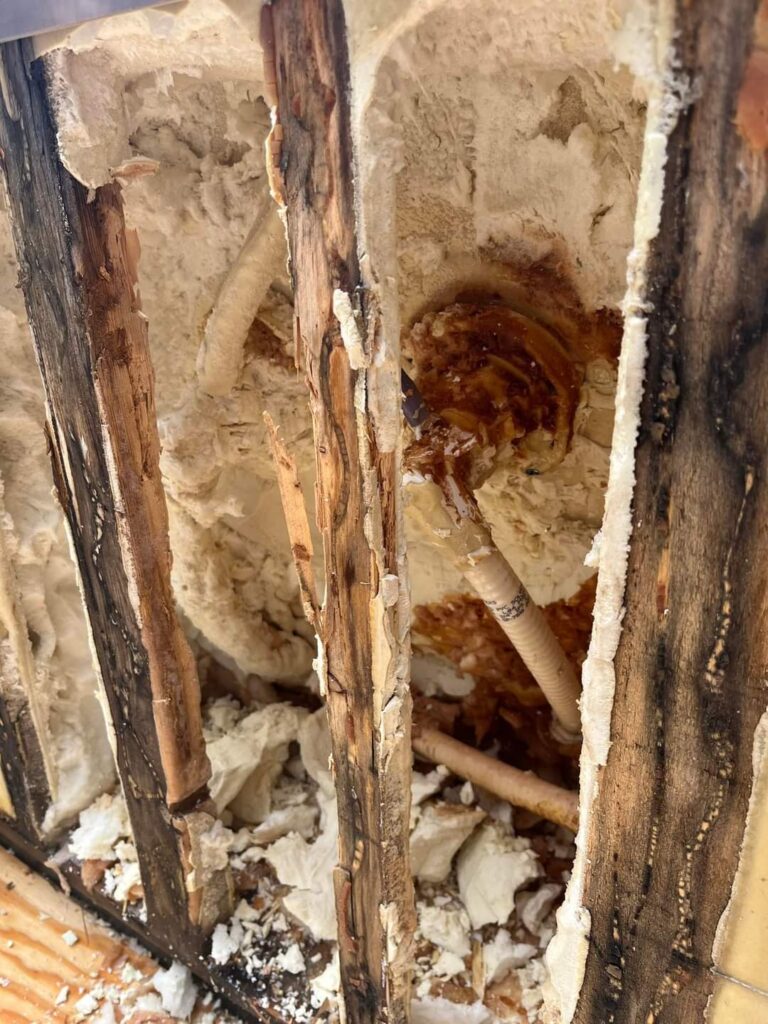
⚠ Real Photos: What’s Hiding Inside a Full Foam Hot Tub
These are photos from actual service calls we’ve been asked to assess. A hot tub that looks perfectly fine from the outside can be a complete disaster underneath. This is why we’re writing this guide.
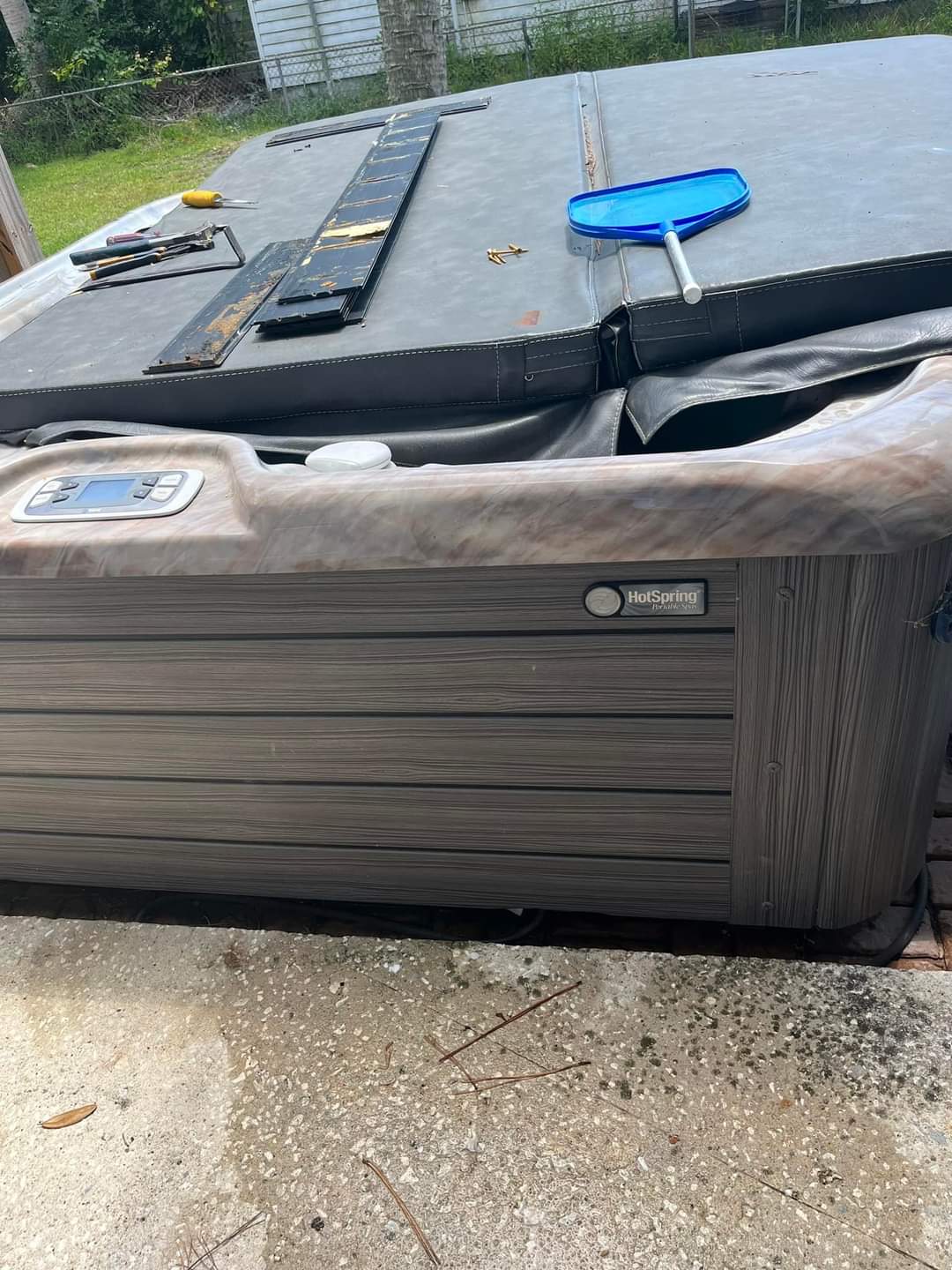
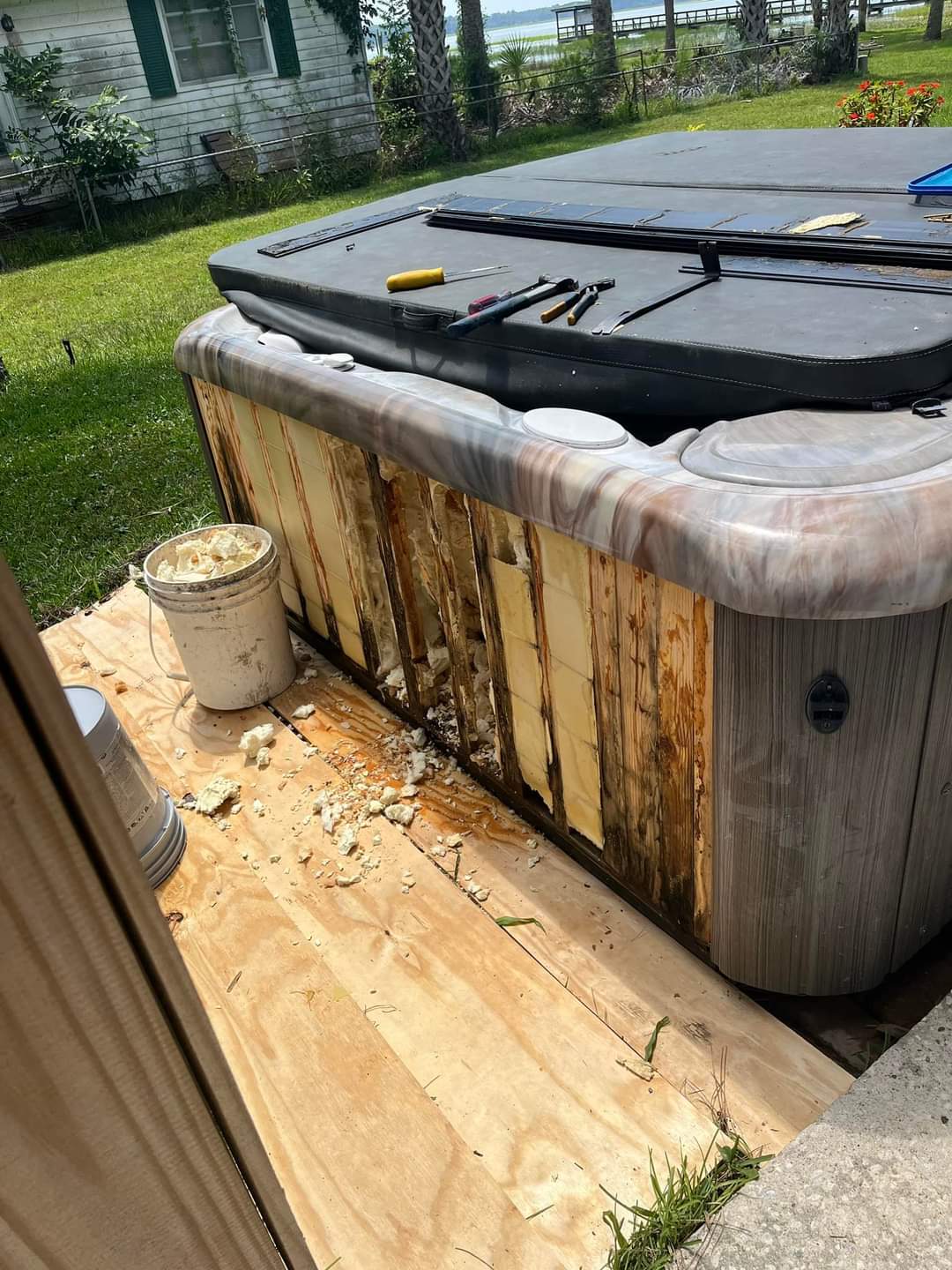
This is the danger of full foam: the outer cabinet hides years of damage. By the time you notice a problem, the spa is often beyond economical repair.
What Is a Full Foam Hot Tub?
A full foam hot tub is one where the entire cabinet — the space between the acrylic shell and the outer wood or composite panels — is packed with dense polyurethane foam. The foam is sprayed in at the factory until it completely fills every inch of the cabinet.
This means the foam surrounds:
- All plumbing lines and fittings
- Pumps and motors
- Electrical components and LED lights
- The structural framing
- Jets, manifolds, and control systems
Manufacturers pitch this as “superior insulation.” And on paper, they have a point — more foam means more thermal resistance.
But in practice, the downsides add up fast.
1. Full Foam Makes Repairs a Nightmare
Here’s the reality of hot tub ownership: every hot tub develops a plumbing issue eventually. Over 15+ years, you’ll deal with:
- Vibrations loosening fittings
- Freeze-thaw cycles in Canadian winters
- Natural settling of the foundation
- Normal wear on seals and jet bodies
- Occasional pump or control failures
With a modern modular hot tub, fixing a small drip is a 30-minute job. Pop off a panel, find the loose fitting, tighten it, done.
⚠ In a full foam hot tub, that same repair becomes a horror story
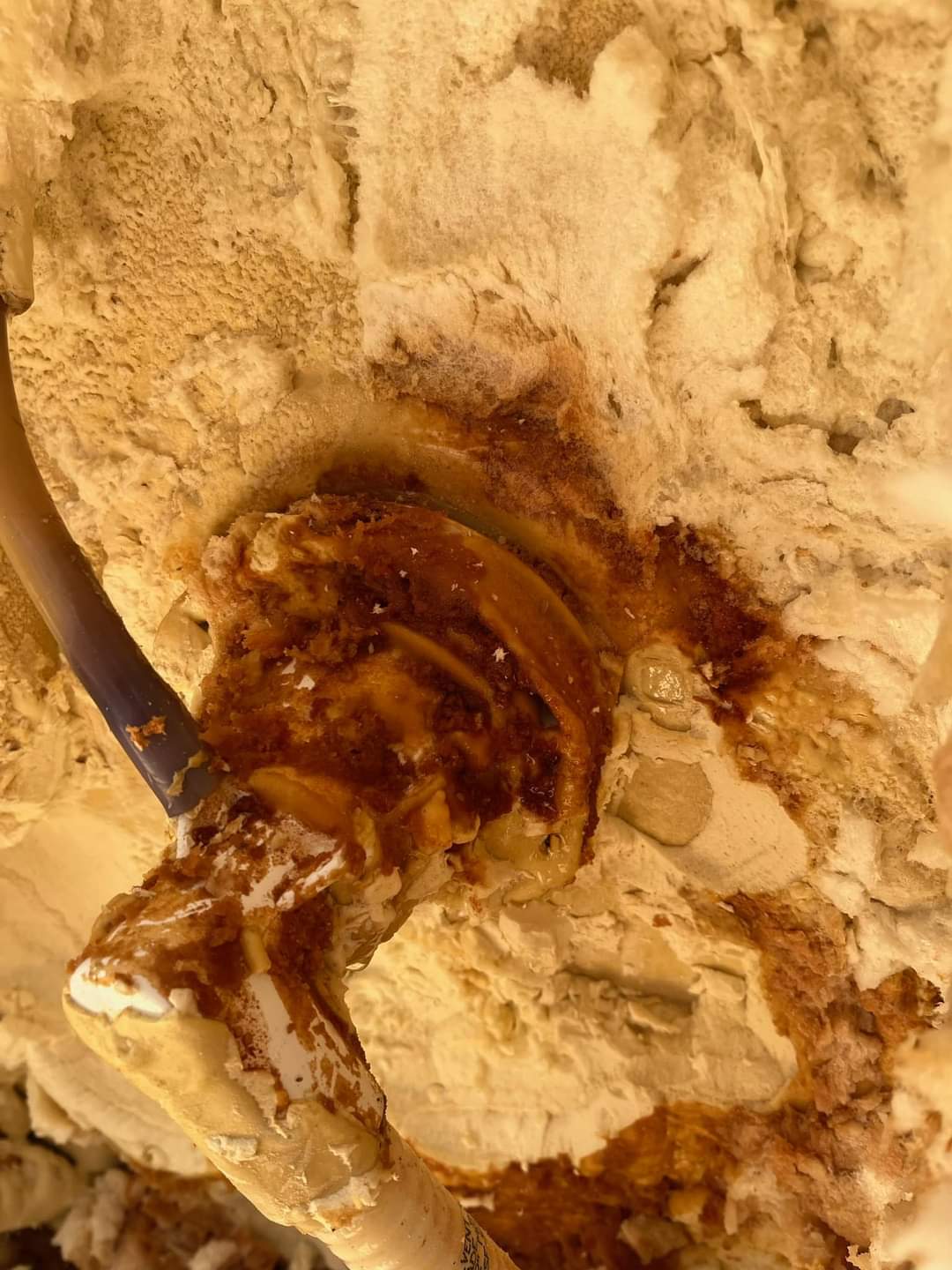
- All plumbing is buried in hardened foam — technicians must dig blindly through inches of solid insulation
- Finding a leak is guesswork — the drip might be coming from anywhere, and foam hides the water trail
- Re-insulation after repair is never clean — the patch will look and perform worse than the original
- LED lights, manifolds, and jets get permanently entombed once the foam sets around them
- You’re locked out of your own spa’s infrastructure
A simple leak repair that costs $150 in a modern tub routinely runs $800 to $2,000 in a full foam model. And that’s if you can even find a technician willing to take the job.
2. Limited Accessibility = Much Higher Lifetime Costs
The math of hot tub ownership isn’t just the sticker price. It’s the total cost over 15-20 years. This includes:
- Normal service calls (expect 2-3 per decade even on quality spas)
- Pump replacements (typical lifespan 7-10 years)
- Control pack upgrades
- Plumbing repairs from freeze damage or wear
- LED light replacements
In a modern hot tub with removable service panels, these are all straightforward. In a full foam model, each becomes a labor-intensive project:
- Multiple service visits required
- Fees for cabinet siding removal
- Charges for digging through and replacing foam
- Longer diagnostic time (techs work blind through foam)
- Some repairs simply not economical to attempt
3. Wood Frames + Full Foam = Rot and Termite Risk
Here’s the dirty secret most full foam manufacturers don’t discuss: most full foam hot tubs are built on wooden frames. Cheap, traditional, and — when sealed inside foam — a recipe for disaster.
Wood framing inside a humid, foam-filled environment creates conditions that professional pest controllers literally design traps around:
⚠ The hidden damage you can’t see
- Moisture gets trapped by the foam — wet wood is rotting wood
- Termites and carpenter ants love soft, moist wood — your spa becomes a five-star resort for them
- Structural weakening happens invisibly — you won’t see it until the cabinet starts sagging
- The foam hides everything — by the time symptoms appear, the damage is usually catastrophic
We’ve personally seen full foam hot tubs 8-10 years old where the wood frame had rotted so badly the spa was structurally unsafe to operate. In one case, termites had eaten through enough of the frame that lifting a panel caused the whole cabinet to flex. The owner had no idea until they called us to diagnose a “wobble.”
At that point, there’s no repair. The spa is done.
⚠ What Rotted Wood Framing Actually Looks Like
Every one of these photos is from a real hot tub we inspected. The owners had no idea this was happening inside their spa.
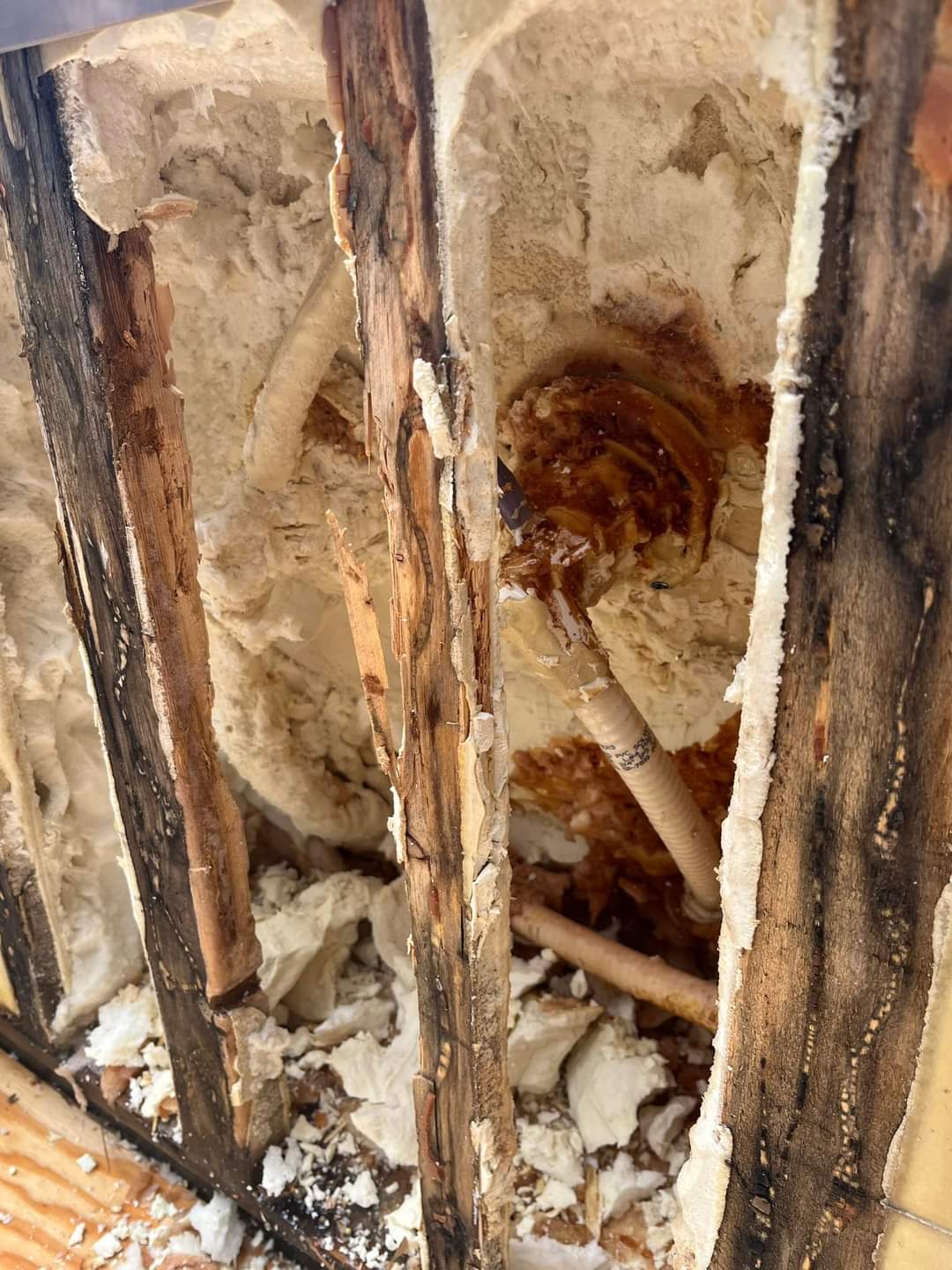
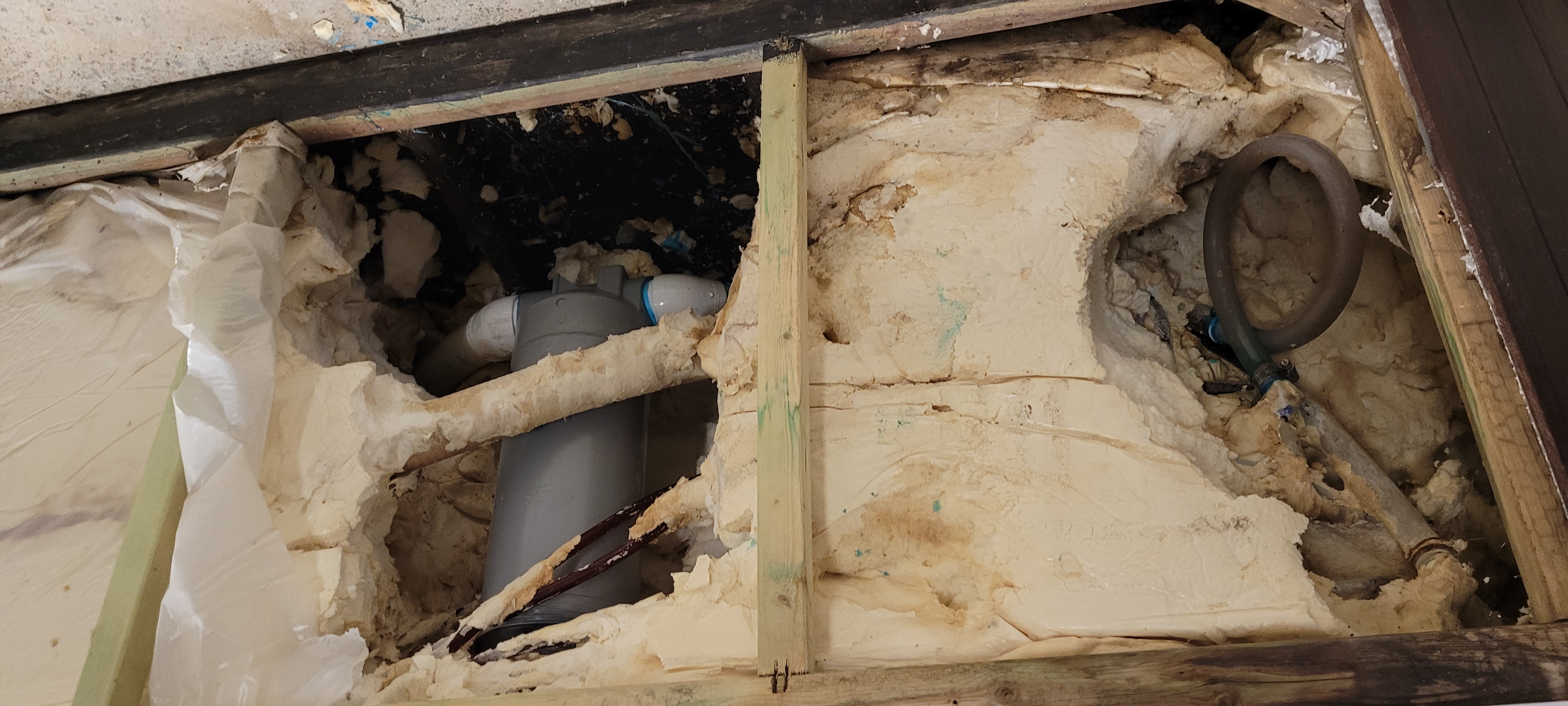
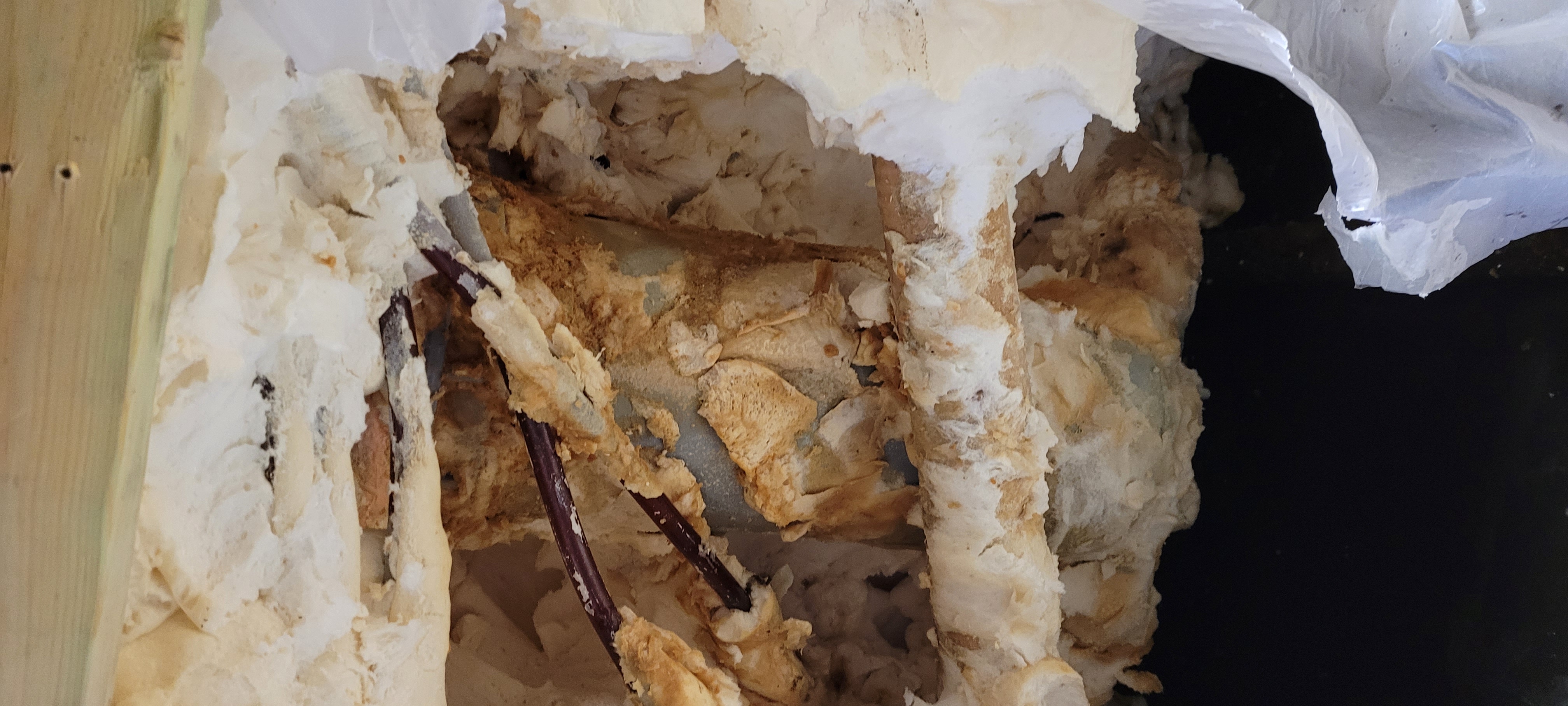
The pattern is consistent: water leak → trapped moisture → wood rot → termite attraction → structural failure. And because the foam hides everything, the damage is usually catastrophic by the time anyone notices.
4. The Smarter Alternative: Modern Layered Construction
Here’s what modern, well-built hot tubs (including every spa we sell) look like under the cabinet:
✓ The four pillars of quality hot tub construction
- Spray foam applied directly to the acrylic shell — heat retention where it matters most
- Rigid insulation panels lining the cabinet walls — creates a thermal envelope without obstructing access
- Stainless steel frame — rot-proof, termite-proof, corrosion-resistant for decades
- Removable access panels — pumps, plumbing, and electronics remain fully serviceable
Our Stargate and other Platinum Spa models use what we call the Platinum Premium Shield construction system:
- Foil-backed perimeter insulation wrapping
- 2lb hard insulation bonded directly to the shell
- Welded 304 stainless steel frame
- Molded ABS pan floor with fibreglass backing
- Gear-clamped plumbing (instead of glued joints)
This design achieves the energy efficiency buyers want ($8.10/month operating costs on standard models) — without sacrificing serviceability, structural integrity, or the ability to repair your spa 10 years from now.
5. Energy Efficiency Without the Full Foam Headache
One of the main sales pitches for full foam is energy efficiency. But modern layered construction achieves comparable real-world performance — and sometimes better — through intelligent design:
- Spray foam on the shell — insulation exactly where heat loss is highest (the water surface area)
- Thermal reflection from cabinet panels — recycles waste heat from pumps and motors back into the water
- Cooler cabinet temperatures — component stress is reduced, which extends equipment life
- Foil-backed perimeter wrap — blocks radiant heat loss without trapping moisture
The difference in monthly operating cost between a well-built full foam spa and a well-built modern spa is typically $5-$15 per month. Not nothing, but not enough to justify the long-term repair headaches.
Full Foam vs Modern Construction: The Comparison
| Factor | Full Foam Hot Tub | Modern Layered Construction |
|---|---|---|
| Leak repair cost | $800 – $2,000+ | $150 – $400 |
| Pump replacement | Full cabinet access needed | Remove one panel, swap pump |
| Frame material | Usually wood | Stainless steel (premium) |
| Rot & termite risk | High (hidden wood + moisture) | None (stainless steel) |
| Monthly hydro (standard use) | $5 – $15 | $8 – $25 |
| Expected lifespan | 8-15 years (depends on repairs) | 15-25 years |
| Service technician availability | Many refuse to work on them | Any qualified tech can service |
| Resale value at 10 years | Very low — often scrap | Retains meaningful value |
How to Tell If a Hot Tub Is Full Foam
Before you sign anything, verify how the hot tub is built. Here’s how:
Ask the dealer directly
A good question to ask: “Can you show me the cabinet interior with a panel removed?” If the dealer refuses, hesitates, or offers excuses, that’s your answer. Quality manufacturers are proud of their construction and happy to show it off.
Request construction photos or video
Modern manufacturers have videos of their build process online. If you can’t find construction content for a specific brand, that’s a red flag.
Ask what the frame is made of
This one question cuts through the marketing: “Is the frame wood or stainless steel?” Stainless steel = premium construction. Wood = potential long-term problems, especially when combined with full foam.
Ask about service access
A quality hot tub dealer will proudly explain how pumps, plumbing, and electronics are serviced. If the answer involves “cutting through foam” or “it’s all sealed in” — walk away.
The Bottom Line: Don’t Get Foamed Into a Corner
Full foam hot tubs make a compelling pitch on paper. Slightly better insulation! More dense construction! Factory-sealed quality!
But the reality over 10-20 years of ownership tells a different story:
- Simple repairs become expensive nightmares
- Hidden wood frames rot or get eaten by termites
- Service technicians charge premium rates (or refuse the job)
- Structural failure can happen without warning
- Resale value collapses as issues accumulate
The smarter choice is a hot tub built with:
- Spray foam applied only where it matters (the shell)
- Rigid, removable insulation panels in the cabinet
- A rust-proof, pest-proof stainless steel frame
- Full service access to every component
You get the same warm, luxurious soak. You skip the repair nightmares. And your spa still works — and still has value — a decade from now.
Full Foam Hot Tub FAQ
What is a full foam hot tub?
A full foam hot tub is one where the entire cabinet (the space between the acrylic shell and outer panels) is packed with dense polyurethane foam. The foam surrounds all plumbing, electrical components, pumps, and structural framing. While marketed as superior insulation, this design makes future repairs difficult and expensive, and creates hidden risks of wood rot and pest damage in wood-framed models.
Are full foam hot tubs more energy efficient?
On paper, full foam hot tubs can offer slight insulation advantages. In practice, modern layered insulation systems (spray foam on the shell plus rigid panels around the cabinet) achieve comparable energy efficiency — with the added benefit of recycling waste heat from pumps and motors. The energy savings of full foam over modern construction are usually minor, while the repair disadvantages are major.
What are the disadvantages of full foam hot tubs?
The main disadvantages are: repairs become extremely difficult because plumbing is buried in hardened foam; wood-framed models trap moisture that leads to rot; wood framing hidden under foam can attract termites and pests; re-insulation after repairs is rarely as effective as original factory installation; and service calls cost substantially more due to extended labor time.
What is the best type of hot tub construction?
The best construction combines spray foam bonded directly to the acrylic shell (for heat retention where it matters), rigid insulation panels lining the cabinet walls (for a thermal envelope without obstructing access), a stainless steel frame (rot and pest resistant), and removable service panels for maintenance access. This design delivers modern energy efficiency without sacrificing serviceability.
Can full foam hot tubs get termites?
Yes. Full foam hot tubs with wood frames are vulnerable to termite damage because the foam traps moisture against the wood creating ideal conditions for infestation. Because the foam hides the wood framing, termite damage often isn’t discovered until structural failure occurs. Hot tubs with stainless steel frames eliminate this risk entirely.
How can I tell if a hot tub is full foam?
Ask the dealer or manufacturer directly, and request a video or demonstration of the cabinet interior. A quality dealer will show you the cabinet with panels off — if you see solid foam everywhere, it’s full foam. If you see exposed plumbing with spray foam on the shell and rigid panels on the cabinet walls, it’s modern modular construction. Also ask if the frame is wood or stainless steel — this matters for long-term durability.
See Quality Construction for Yourself
Visit our Oakville showroom and ask us to show you exactly how our hot tubs are built. We’ll pop a panel, show you the stainless steel frame, and explain every component. No hiding behind foam. No marketing fluff. Just honest, accessible construction you can actually see.
Call 905-338-9995 Book an In-Store Demo Browse Hot TubsRelated Guides
- How Much Does a Hot Tub Cost in Ontario? 2026 Buyer’s Guide — Complete pricing breakdown including hidden lifetime costs.
- How Much Does a Swim Spa Cost in Canada? 2026 Buyer’s Guide — Pricing for portable and inground swim spas.
- Browse Our Hot Tub Collection — Premium Platinum Spas and Artesian hot tubs.
- Video Library — See construction and demos on video.
This guide was written by the team at Factory Hot Tubs & Swim Spas — family-owned at 550 Speers Road in Oakville since 2001. We carry Platinum Spas by Superior Wellness and Artesian Spas, and we’ve serviced hundreds of hot tubs (including full foam models from other manufacturers). We serve Oakville, Burlington, Mississauga, Toronto, and Milton.